
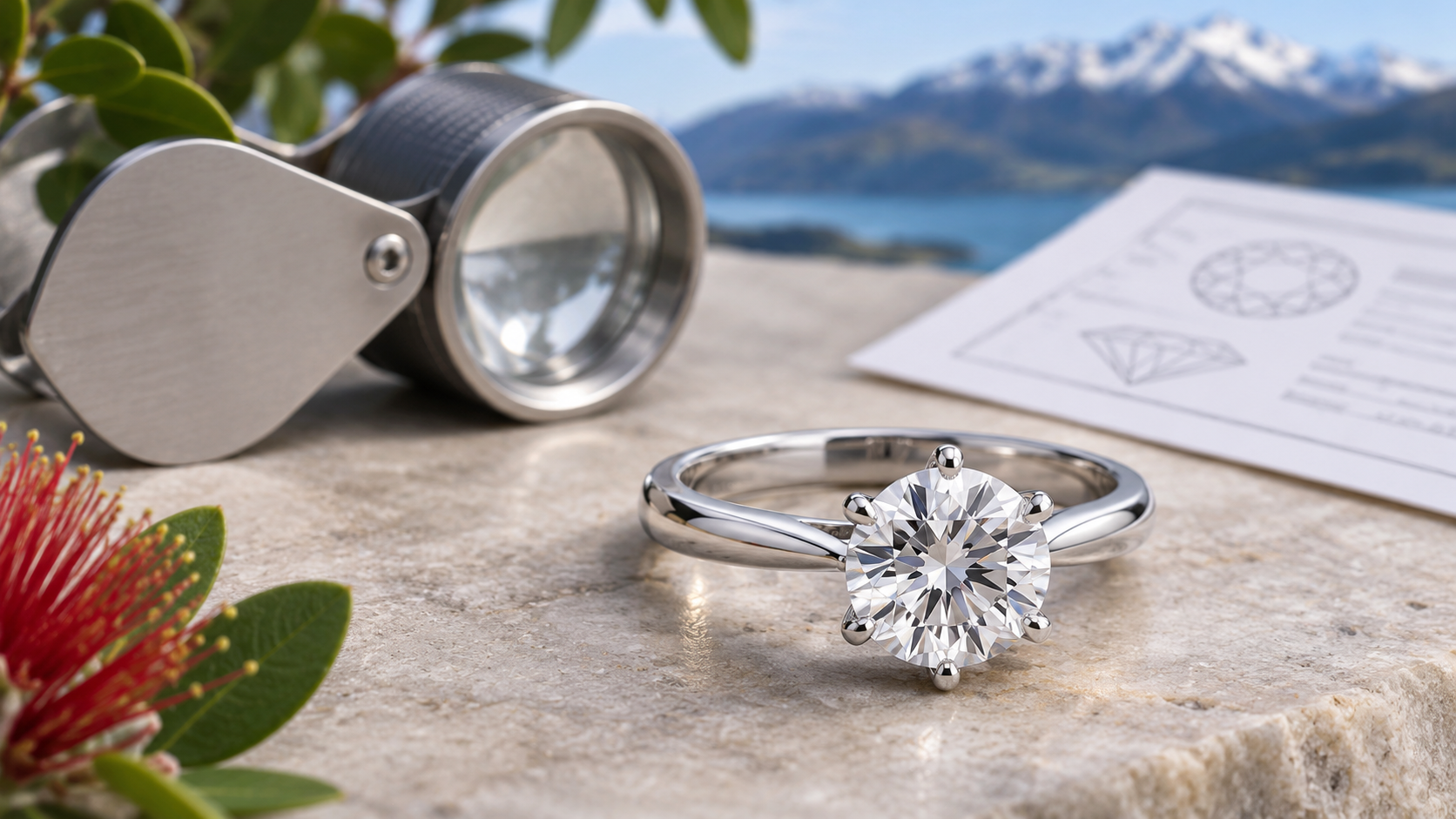
An engagement ring can look almost identical to another ring and still carry a very different price tag. For New Zealand couples, that makes the question less about finding the biggest stone and more about knowing what the money actually buys.
Lab grown diamond engagement rings have widened the choice. A buyer may be able to choose a larger centre stone or put more of the budget towards a carefully made setting. But a lower sticker price tells only part of the story. Grading, design, maintenance and the terms of sale all deserve a place in the decision.
The Stone Is a Diamond, but Its Origin Matters
A laboratory-grown diamond has the same basic chemical composition and crystal structure as a natural diamond. It is not cubic zirconia or moissanite, which are different materials. Laboratory diamonds are made using specialised equipment, commonly through high-pressure, high-temperature (HPHT) or chemical vapour deposition (CVD) processes.
The distinction is origin, not whether the stone counts as a diamond. A natural diamond formed underground; a laboratory-grown one was produced in a controlled environment. A reputable seller should clearly state which type is being offered, and the paperwork should agree with the description.
Appearance still varies. Two stones of the same weight can reflect light differently, and a ring’s setting can change how large or bright the centre stone looks. That is why comparing only the carat figure rarely leads to the most useful decision.
Lower Purchase Price Does Not Mean Equal Value in Every Sense
Laboratory-grown diamonds generally cost less than comparable natural diamonds at retail. Production has expanded, and industry research has documented substantial declines in laboratory-grown diamond prices over time. Yet the exact price difference depends on the stone, seller and market, so overseas figures should not be treated as New Zealand quotes.
There are at least three meanings of value in an engagement ring. The first is what you pay today. The second is how much use and enjoyment the ring gives its wearer. The third is what someone might pay for it second-hand. These measures do not always move together.
A couple planning to wear a ring for decades may reasonably prioritise appearance, comfort and affordability. Someone expecting to recover most of the purchase price later needs a more cautious view. Retail prices include design work, metal, labour, business costs and service, and none of those charges automatically return to the owner at resale.
That distinction is worth keeping in mind when reading discussions about the economics of lab diamonds. A good price for jewellery is not the same as a dependable investment return.
A Grading Report Needs a Closer Look in 2026
The familiar four Cs are cut, colour, clarity and carat weight. They remain useful questions to ask, but buyers should check who produced the report and what grading system it uses.
There was an important change in October 2025. The Gemological Institute of America (GIA) introduced a new quality assessment for eligible laboratory-grown diamonds in the D-to-Z colour range, using the descriptions Premium and Standard rather than its previous detailed colour-and-clarity grading approach. The International Gemological Institute (IGI), meanwhile, continues to offer reports using the four Cs for laboratory-grown diamonds.
This is not a reason to reject either organisation’s paperwork. It is a reminder that two reports can look different without describing the same grading categories. Ask the jeweller to explain the report’s terminology and confirm the report number through the issuing laboratory’s verification service.
Pay special attention to cut. Carat measures weight, not brightness, and two stones that weigh the same may look quite different in person. When possible, view a ring under ordinary lighting as well as the bright lighting used in a showroom.
The Setting Changes Both the Cost and the Daily Experience
The centre stone may attract most of the attention, but the rest of the ring makes a difference every day. A delicate band can suit one person, while another may prefer a sturdier shape that feels secure at work or during regular activities.
Metal choices also affect the final quote. Gold comes in different purities and colours, while platinum has its own weight, feel and care considerations. Ask whether the quoted price includes the centre stone, side stones, the chosen metal, setting work, resizing and any applicable taxes.
There is no universal best setting. A high-set stone may catch on clothing more easily than a lower profile design. Some intricate designs can take more time to clean or repair. The practical choice is one that fits the wearer’s routine rather than simply looking impressive in a close-up photograph.
Compare the Complete Ring, Not Two Headline Prices
It is tempting to compare a ring advertised for one amount against another advertised for less. That comparison may be meaningless if the quotations cover different stone qualities, metals or services.
Start with two or three rings you genuinely like. For each, write down the stone’s measurements, grading paperwork, metal specification, total NZD price, delivery terms and aftercare arrangements. Ask whether the setting can accommodate later resizing and who would handle repairs.
One way to build a shortlist is to browse New Zealand sellers of lab grown diamonds and compare the details of each stone and setting, rather than selecting a ring on carat weight alone. If the seller has a showroom, seeing the proportions on a hand may be more helpful than relying on photographs.
Do not forget timing. A made-to-order ring may have a different delivery schedule from a finished piece that is already in stock. Ask for a written estimate, especially if the ring is needed before a proposal, wedding or overseas trip.
Overseas Prices Can Hide Extra Costs
International websites offer a wider view of designs, but an overseas quote is not necessarily the amount a New Zealand buyer will pay. Currency conversion, delivery, insurance, GST and possible import charges can change the total.
New Zealand Customs says purchases from overseas worth more than NZ$1,000 generally require a Customs Number and may attract GST, duty or other charges at the border. For lower-value goods, GST may instead be collected when the purchase is made. Confirm the treatment of the actual order rather than assuming every online price includes all charges.
Returns can also be less straightforward across borders. Before ordering, check which country the seller operates from, where the ring must be sent for repair, who pays insured return shipping and whether custom-made jewellery can be returned for a change of mind.
Know What Consumer Protection Covers
Under New Zealand’s Consumer Guarantees Act, goods purchased from businesses trading in New Zealand must meet relevant guarantees, including acceptable quality and matching their description. The Fair Trading Act also protects consumers against misleading claims. Those rights are different from a shop’s voluntary change-of-mind policy.
If you buy from an overseas business, New Zealand law may still apply, but enforcing it can be difficult. Keep screenshots of the listing, written specifications, proof of payment and conversations about delivery or repairs.
Take care with environmental claims too. Laboratory origin alone does not establish a ring’s total environmental footprint. Energy sources, manufacturing, metals and transport all matter. New Zealand’s Commerce Commission expects environmental claims made by traders to be accurate and backed by evidence.
The Better Choice Is the One You Understand
An engagement ring does not have to double as an investment to be worth buying. For some couples, a lab created diamonds stone offers room in the budget for a shape, size or setting they would otherwise pass over. For others, a natural diamond’s origin or personal meaning matters more.
The useful comparison is the whole ring: a clearly identified stone, understandable grading, comfortable design, realistic total cost and a seller whose obligations are easy to check. When those details are clear, price becomes one factor in a well-informed purchase rather than the only one.